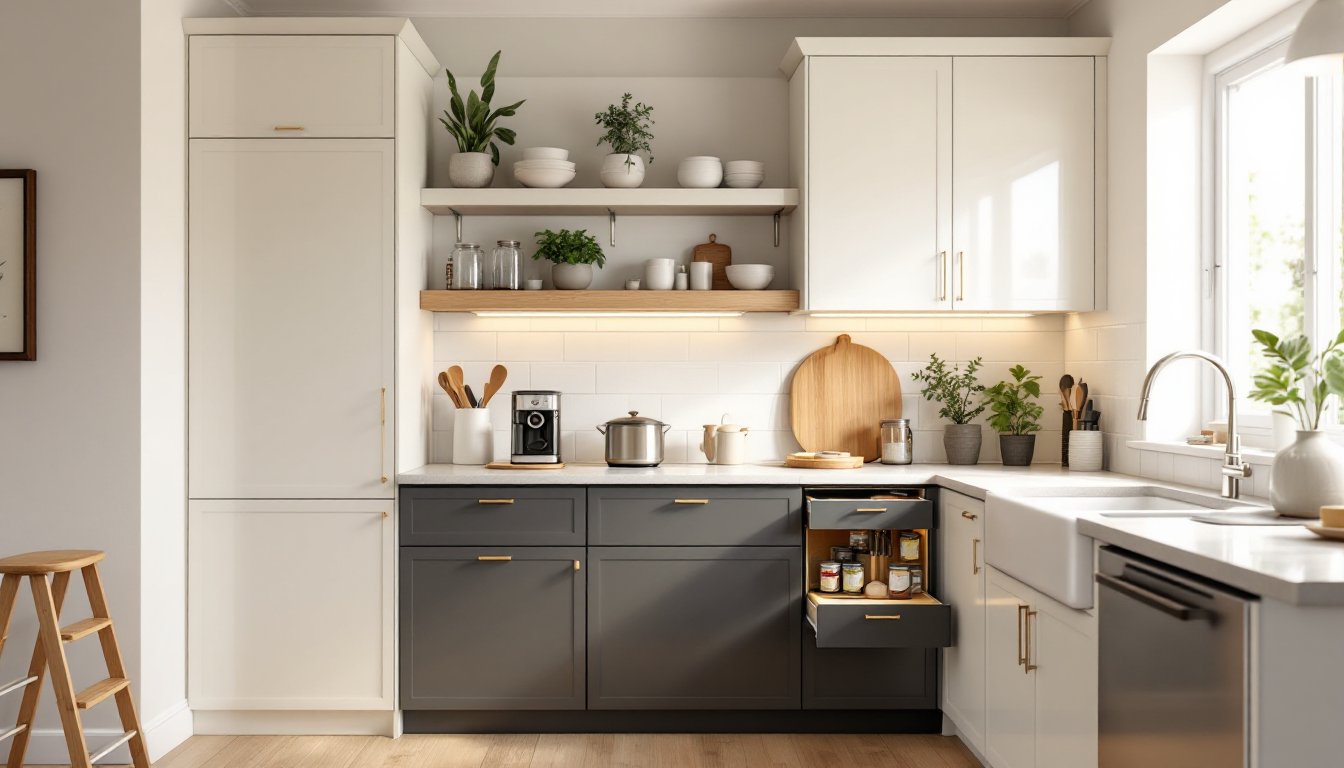
Small kitchens don’t need to feel cramped or cluttered, they just need the right cabinet strategy. Whether you’re working with a galley layout, an apartment kitchen, or a snug cottage space, smart kitchen cabinet ideas can transform how you cook, store, and move around. The key is choosing solutions that maximize every inch without sacrificing function or style. This guide walks through practical, proven cabinet upgrades that work in tight quarters, from vertical storage to reflective finishes. You’ll find honest advice on what actually works versus what sounds good on Instagram.
Table of Contents
ToggleKey Takeaways
- Floor-to-ceiling kitchen cabinet ideas maximize vertical storage in small kitchens without consuming extra floor space, though top shelves should be reserved for items used infrequently.
- Open shelving creates an airy feel in compact spaces, but requires disciplined organization and attractive dishware to avoid amplifying visual clutter.
- Pull-out drawers and sliding organizers transform hard-to-reach cabinet spaces into fully accessible storage, with soft-close mechanisms worth the investment for durability and reducing noise.
- Light colors and reflective finishes like gloss or semi-gloss paint make small kitchens feel larger by bouncing light throughout the room, while matte finishes absorb light and feel heavier.
- Corner storage solutions such as lazy Susans, carousel systems, and deep drawer dividers eliminate wasted dead zones and convert awkward corners into functional, accessible storage.
- Before installing any cabinet upgrades, verify ceiling height, wall alignment, door clearance, and appliance proximity to ensure proper fit and safe operation in tight spaces.
Maximize Vertical Space With Floor-To-Ceiling Cabinets
The biggest mistake small-kitchen owners make is leaving the wall space above standard 36-inch base cabinets bare. That’s dead real estate. Going floor-to-ceiling with your cabinetry, or as high as your ceiling and soffit allow, instantly adds usable storage without taking up extra floor space.
Floor-to-ceiling runs are harder to access at the top, so reserve that premium upper zone for items you don’t grab daily: serving dishes, seasonal equipment, or rarely-used small appliances. The middle shelves should hold everyday essentials within arm’s reach. Install a sturdy step stool nearby if your ceilings run high (9+ feet).
Before ordering cabinets, measure your ceiling height and check for any obstructions: light fixtures, HVAC vents, or crown molding that might cut into the available height. Also verify your walls are plumb (vertical) and square: old houses rarely are. If walls are significantly out, a cabinetmaker might need to scribe the cabinet frames to fit, adding time and cost.
Choose Open Shelving To Create an Airy Feel
Open shelving makes a small kitchen feel less boxed in. Removing a few cabinet doors and replacing them with open shelves or simply keeping shelves without upper cabinet boxes breaks up visual weight and gives the eye room to breathe.
The catch: open shelves demand discipline. Dishes, glasses, and containers show, so they have to be organized and attractive. Mix matching dishware with a few decorative pieces, a small plant, a wooden cutting board propped upright, a set of nesting bowls. Avoid clutter: open shelving amplifies visual mess.
Material choices matter too. Stainless steel brackets and butcher-block shelves feel warm and functional. Floating shelves (cantilevered, with no visible support) look sleek but have weight limits, typically 25–50 pounds per shelf depending on construction. Install floating shelves into studs or use heavy-duty toggle bolts into drywall, and never exceed the manufacturer’s rated load. Brackets rated for your shelf length and weight are non-negotiable: skimping here leads to sagging or collapse.
Install Pull-Out Drawers and Sliding Organizers
Pull-out drawers and sliding organizers turn deep, hard-to-reach cabinet spaces into accessible storage. Instead of reaching to the back of a 24-inch-deep cabinet and fumbling around, you slide the drawer or shelf out fully. You see everything at once.
Soft-close mechanisms are worth the extra cost in a small kitchen where noise carries and frustration builds quickly. When cabinet space is tight, slamming drawers adds stress to a cramped environment. Soft-close slides cost a bit more per unit but last longer and feel premium, they dampen the motion with a hydraulic mechanism.
Retrofitting existing cabinets with pull-out organizers is often cheaper than replacing cabinetry. Companies like Rev-A-Shelf make modular, slide-in systems for base cabinets, corner cabinets, and even tall pantries. Measure your cabinet interior (opening width, depth, and height) carefully before ordering. You’ll need a drill and basic carpentry skills to install brackets and secure the slides to the cabinet interior walls.
Use Light Colors and Reflective Finishes
Light cabinets bounce light around a small room, making the space feel larger than it is. White, cream, pale gray, or natural blonde wood all create an open, airy effect. Dark cabinets, navy, charcoal, or rich walnut, make a statement but can narrow the perceived space if used floor-to-ceiling.
Reflective finishes amplify this effect. Gloss or semi-gloss cabinet paint or lacquer reflects light from windows, pendant lights, or under-cabinet LEDs. Matte finishes, while trendy and forgiving of fingerprints, absorb light and feel heavier. If you love a matte look, consider using it on lower cabinets only (where fingerprints land) and pairing it with glossy uppers.
When choosing cabinet materials, understand the difference between painted MDF (medium-density fiberboard), painted plywood, and painted solid wood. MDF is affordable, paints beautifully, and resists warping, ideal for small kitchens where humidity swings matter. Real wood feels premium and handles wear well, but costs more. Consider small kitchen solutions that professionals recommend for balanced aesthetics and durability.
Add Corner Storage Solutions
Corner cabinets are notorious for wasted space. A standard corner blind cabinet can hide 16–20 inches of dead zone on both sides of the corner. Modern solutions make those deep, awkward corners finally functional.
Lazy Susans and Carousel Systems
A lazy susan (rotating tray) keeps items visible and accessible. You spin it to reach items at the back without contorting yourself. Solid wood or plastic options are available: wood holds more weight but costs more. Install a lazy susan on a base shelf inside the corner cabinet for dry goods, canned items, or small appliances like a mini blender or food processor. Load the tray strategically: heavier items toward the center, lighter ones on the outer edge for better balance and easier spinning.
Carousel systems are the upgrade: a full-height, two-tier rotating unit that makes use of the entire corner cabinet height. They’re pricier than a single lazy susan but convert a dead corner into premium storage. Measure your corner cabinet’s interior width and depth before ordering, these units are custom-fitted.
Deep Drawer Dividers
For cabinets with drawers (not open shelves), deep drawer dividers prevent the jumbled chaos that deep corners create. Bamboo or plastic dividers organize tools, gadgets, and small bowls into distinct zones. Label zones by category: “measuring spoons,” “gadgets,” “lids”, whatever you store there. A 12-inch-deep divider costs $15–40 and transforms a frustrating junk drawer into a functional system. Look for adjustable dividers that fit your drawer dimensions: fixed-width dividers are useless if they don’t match your cabinet.
Before installing any corner solution, check that your cabinet doors open fully and don’t interfere with adjacent appliances or the sink. A carousel system in a corner near the stove needs enough clearance that the rotating tray doesn’t bump a pot handle or the oven door.