
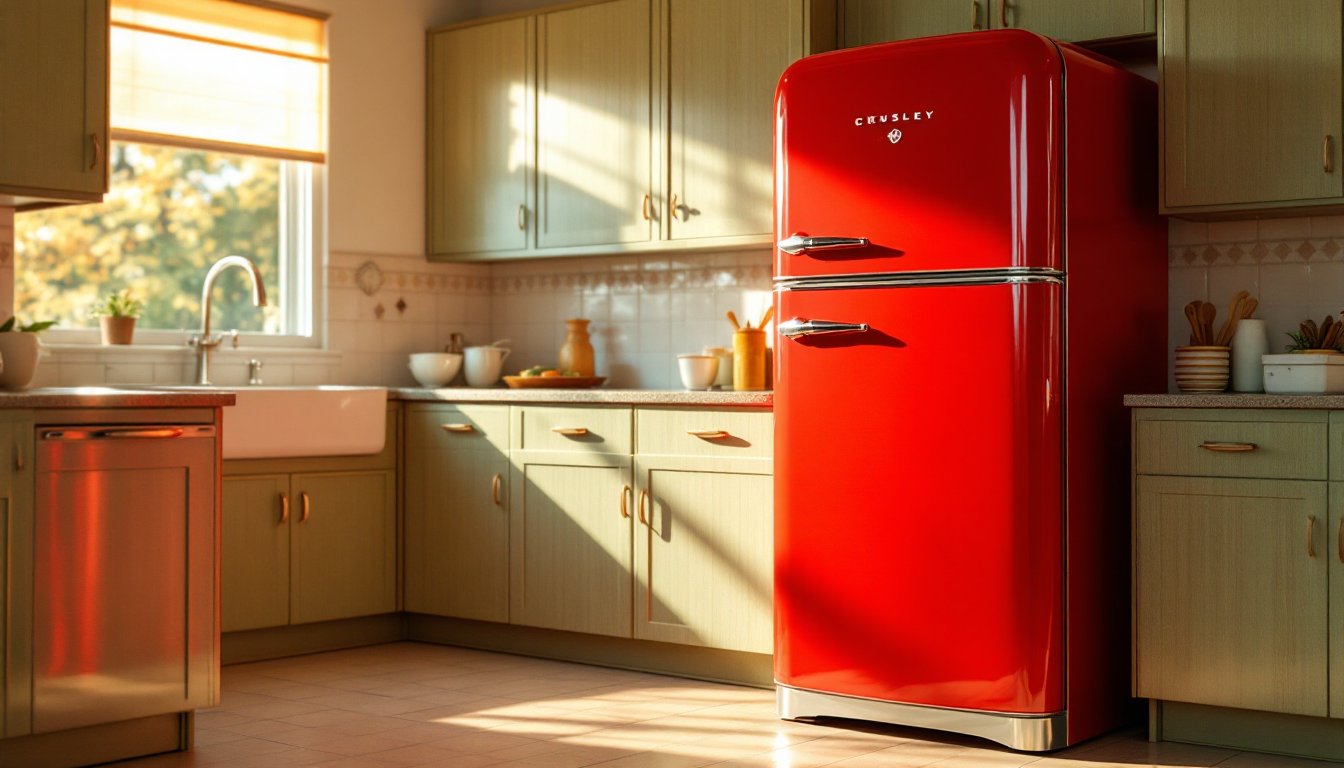
Crosley refrigerators have carved out a unique niche in the kitchen appliance market by blending nostalgic 1950s aesthetics with contemporary cooling performance. For homeowners and DIY enthusiasts looking to inject personality into their kitchens, a Crosley fridge offers a compelling alternative to stainless steel sameness. These retro-styled units aren’t just about looks, they deliver reliable performance and energy efficiency standards that hold up against modern competitors. Whether you’re renovating a vintage-inspired space or adding a statement piece to a contemporary kitchen, understanding what Crosley brings to the table helps you make an well-informed choice before installation.
Table of Contents
ToggleKey Takeaways
- Crosley refrigerators blend authentic 1950s design with modern cooling performance, making them ideal for homeowners seeking a retro-styled kitchen focal point rather than a background appliance.
- A Crosley fridge typically costs 20–40% more than conventional models with equivalent capacity, so prioritize purchasing if you plan to stay long-term and value aesthetic appeal over budget constraints.
- Most Crosley refrigerator models maintain proper food safety temperatures (32–40°F fridge, 0–10°F freezer) and carry Energy Star certification, with annual operating costs around $50–100 depending on local electricity rates.
- Installation requires standard spacing (2–4 inches clearance on sides and back), a level floor, and proper ventilation; always measure your kitchen opening carefully since handle and trim can exceed stated cabinet dimensions.
- Crosley models work best as primary units in vintage-themed kitchens or as secondary fridges in offices, basements, or guest houses—skip them if you need modern conveniences like French doors, smart connectivity, or ice/water dispensers.
- Routine maintenance (cleaning condenser coils every 3–6 months and wiping door seals quarterly) keeps your Crosley operating efficiently and extends compressor lifespan significantly.
What Makes Crosley Refrigerators Stand Out
Design Features and Aesthetic Appeal
Crosley refrigerators are instantly recognizable for their curved lines, rounded corners, and chrome accents, hallmarks of 1950s design language. Available in classic colors like mint green, cherry red, pale yellow, and cream, these units become focal points rather than background fixtures. The exterior hardware (handles, hinges, trim) is typically finished in polished or brushed chrome, adding authentic period detail without feeling cheap or costume-y.
Beyond visual appeal, the design translates to practical benefits. The wider profile and top-mounted freezer compartment reflect genuine vintage proportions, not a stylized interpretation. Interior layouts prioritize accessibility: shelves are typically glass or adjustable wire, making it easy to see and reach items without awkward digging. The door storage bins accommodate standard bottle and carton sizes without the cramped feeling of some ultra-compact retro models.
Crosley offers several body styles: single-door models (refrigerator-only, ideal for small kitchens or as a secondary unit), standard two-door combos with freezer-on-top, and some three-door configurations with separate freezer drawers. This range means you can match your kitchen layout and household size rather than compromising on aesthetics or capacity.
Popular Crosley Refrigerator Models for Homeowners
The Crosley Shelvador line is among the most recognizable, featuring the classic two-door design with a freezer compartment above the main refrigerator section. This model typically measures around 33.5 inches wide, 67 inches tall, and 24 inches deep (nominal dimensions vary slightly by year and specific model). The Shelvador name refers to the shelves integrated into the door, a clever space-saving detail borrowed from vintage 1950s designs.
For those with tighter spaces, the Crosley Compact or Portable series offers scaled-down versions, often around 20-22 inches wide, while maintaining the retro silhouette. These work well as dorm-room fridges, office break rooms, or basement rec spaces. They sacrifice some total capacity but retain the character and basic functionality of larger models.
Other popular variants include models with ice makers (though retrofitting ice makers into vintage-style cabinets takes planning), glass or chrome shelving options, and door configurations. Some units come with detailed product reviews and specifications at CNET, which can help compare specific features like compressor type, thermostat control, and noise levels. When shopping, verify the exact interior capacity (typically 10 to 20 cubic feet) and whether the model includes modern conveniences like automatic defrost (most do) or adjustable temperature zones (fewer offer this feature).
Performance and Energy Efficiency Considerations
Crosley refrigerators typically use rotary or reciprocating compressors similar to those in conventional units, so cooling performance is solid under normal household conditions. Most models maintain temperatures between 32–40°F in the fridge section and 0–10°F in the freezer, meeting standard food safety guidelines set by USDA and CDC standards.
Energy efficiency is where expectations deserve clarification. Most Crosley models carry an Energy Star certification or equivalent, meaning they consume less power than non-certified units. But, the older the model year or the larger the cabinet volume relative to modern machines, the higher the annual energy cost. Expect typical operating costs around $50–100 annually depending on local electricity rates, though exact figures vary. The manual defrost versions (less common now) are more efficient but require periodic manual thawing, a trade-off many homeowners reject.
Noise levels tend to be slightly higher than contemporary refrigerators, particularly during the compressor cycle. You’ll hear the unit running: it’s not silent. This is partly inherent to the compressor type and partly a side effect of the vintage cabinet construction, which doesn’t include all the modern insulation and vibration-dampening found in high-end contemporary units.
Before purchasing, check the Energy Guide label on the model you’re considering. This provides estimated annual operating cost and allows you to compare across models. Good Housekeeping’s appliance testing covers reliability and real-world performance, offering insights beyond spec sheets.
Installation and Maintenance Tips for Your Crosley Fridge
Installing a Crosley refrigerator requires the same fundamentals as any fridge: a level floor, adequate ventilation space, and proximity to a grounded electrical outlet. Most units need 2–4 inches of clearance on the sides and back to allow proper air circulation. Measure your kitchen opening carefully: nominal dimensions can be deceiving, and the actual cabinet width often exceeds the stated measurement once you account for the handle and trim.
Preparation steps:
- Remove packaging and any transit bolts holding the compressor in place (check the manual, these prevent internal damage during shipping).
- Let the unit sit upright for 4–6 hours before plugging in if it was transported horizontally. This allows refrigerant and oil to settle properly.
- Clean the interior and exterior with a damp cloth before stocking food.
- Set the thermostat to medium: let it run for 30 minutes before loading food, so the interior reaches proper temperature.
Maintenance is straightforward. Clean the condenser coils (usually on the back or underneath) every 3–6 months using a soft brush or vacuum to remove dust buildup. This keeps the unit running efficiently and extends compressor life. Wipe down door seals quarterly with a damp cloth to prevent mold and ensure a tight seal. Most Crosley models use replaceable door gaskets if they crack or lose elasticity.
If the unit stops cooling, the most common issues are a tripped circuit breaker, a clogged condenser, or, rarely, a failed compressor. Check the power first, then the coils. Kitchen appliance maintenance guides at The Kitchn offer troubleshooting advice for common refrigerator problems, though serious mechanical failures warrant a professional service call.
Is a Crosley Refrigerator Right for Your Kitchen
A Crosley fridge makes sense if you prioritize aesthetic consistency with a retro or vintage-themed kitchen. If your space features 1950s-style cabinetry, chrome fixtures, or art deco elements, a Crosley unit reinforces that design direction rather than clashing with it. It’s also a smart choice for secondary applications, a man cave, workshop, guest house, or vacation property, where style and character matter as much as raw appliance performance.
Skip the Crosley if you need cutting-edge features like French doors, bottom freezers, smart connectivity, ice and water dispensers built into the door, or precise temperature zoning. These are typically available only on contemporary models and don’t fit the retro design. Similarly, if kitchen space is severely limited, the relatively wide footprint of even “compact” Crosley models may not fit as efficiently as a modern apartment-sized refrigerator.
Consider your budget too. Crosley fridges cost more than equivalent-capacity conventional appliances, often 20–40% more, purely because you’re paying for the design premium. If you plan to resell the home in a few years, a retro fridge may appeal to niche buyers but could limit your buyer pool compared to a stainless steel standard. But, if you own the home long-term and genuinely love the look, that premium is justified by years of visual satisfaction and reliable operation.
Measure your space, verify electrical access, and confirm you have adequate ventilation before committing. A Crosley refrigerator is a statement piece: make sure it’s a statement you want to live with.
Conclusion
Crosley refrigerators successfully marry retro charm with functional cooling performance, making them a legitimate choice for homeowners who value design consistency and character. They’re not gimmicks, they’re well-engineered appliances dressed in period-appropriate styling. Understand your kitchen’s layout, your aesthetic goals, and realistic feature expectations before purchasing. The result will be a refrigerator that works reliably while making your kitchen genuinely distinctive.