Your Shark Rocket vacuum is only as effective as its filters. Clogged or worn filters don’t just reduce suction, they force the motor to work harder, shortening the machine’s lifespan and leaving dirt behind on your floors. Whether you own a corded stick model or a cordless unit, understanding your Shark Rocket filter types, when to clean versus replace them, and how to find compatible replacements will keep your vacuum running like new. This guide walks you through everything you need to know about maintaining your Shark Rocket filters in 2026.
Table of Contents
ToggleKey Takeaways
- Shark Rocket vacuum filters consist of multiple layers—HEPA, pre-filter, and foam—each designed to capture different particle sizes and maintain peak suction performance.
- Replace your HEPA filter every 12–18 months under normal use, or every 6–12 months if you have pets or allergies, as worn filters force motors to work harder and shorten machine lifespan.
- Clean foam pre-filters every 1–2 weeks and HEPA filters every 2–4 weeks with cool water and complete air-drying to extend filter life without water damage or mold growth.
- Always verify your exact Shark Rocket model number before purchasing replacement filters to avoid buying incompatible parts that won’t seal properly or fit your unit.
- A true HEPA filter traps 99.97% of particles 0.3 microns or larger, making it essential for indoor air quality if anyone in your home has allergies or asthma.
Understanding Different Shark Rocket Filter Types
Shark Rocket vacuums typically use multiple filter layers, each designed to capture different particle sizes. Most models include a main HEPA filter, a pre-filter, and sometimes a foam filter or brush roll cage filter. Knowing which filter does what helps you maintain them correctly and replace the right part when needed.
HEPA Filters Explained
The HEPA filter (High-Efficiency Particulate Air) is your vacuum’s primary defense against dust, allergens, and fine particles. A true HEPA filter traps 99.97% of particles 0.3 microns or larger, that includes pollen, pet dander, and dust mite debris. In Shark Rocket models, this filter is usually cylindrical or accordion-shaped and sits inside the main canister. It’s washable on most models, but it has a lifespan. After 12–18 months of regular use, a HEPA filter loses efficiency even with cleaning and needs replacement. If anyone in your home has allergies or asthma, a functioning HEPA filter isn’t optional, it’s essential for indoor air quality.
Pre-Filters and Foam Filters
Before dirt reaches the HEPA filter, it passes through a pre-filter, usually a foam or mesh screen. This layer catches larger debris: hair clumps, lint, and pet fur. By doing the heavy lifting upfront, the pre-filter extends the HEPA filter’s life significantly. Shark Rocket foam filters are washable and should be cleaned every 1–2 weeks during regular use, more often if you have pets. Unlike HEPA filters, foam pre-filters rarely need replacement unless they tear or permanently lose their shape. Some models also have a brush roll cage filter (a plastic shroud around the motorized brush), which collects hair and keeps it from wrapping around the brush itself. This isn’t a true filter but should be rinsed occasionally to prevent clogs.
When and How to Replace Your Shark Rocket Filters
Replacement timing depends on use frequency and whether you have pets or allergies. As a baseline, replace the main HEPA filter every 12–18 months. If you have multiple pets or someone with severe allergies, every 6–12 months is smarter. Pre-filters typically last 2–3 years before needing replacement, but foam can deteriorate faster in humid climates.
Watch for these signs that replacement is overdue: suction drops noticeably even after cleaning, a burning smell comes from the vacuum (friction from a clogged filter heating up), or water won’t rinse cleanly from the foam filter. The order matters when installing a new filter, always put the pre-filter in first, then the HEPA filter on top. Reviews from industry testers highlight that Shark Rocket models perform, as this maintains the engineered airflow path.
Before you order a replacement, verify your exact model number (usually on a label inside the canister or on the bottom of the main unit). “Shark Rocket” is a brand umbrella covering dozens of variations, HZ500, HZ501, DuoClean, Anti-Allergen, and cordless versions all use different filter sets. Ordering the wrong filter wastes money and doesn’t fit.
Cleaning vs. Replacing: What You Need to Know
Not every filter problem needs a replacement, but not every filter can be cleaned back to like-new condition either. The HEPA and foam filters in Shark Rocket vacuums are washable, meaning you can extend their life with regular cleaning. But, washable doesn’t mean they last forever.
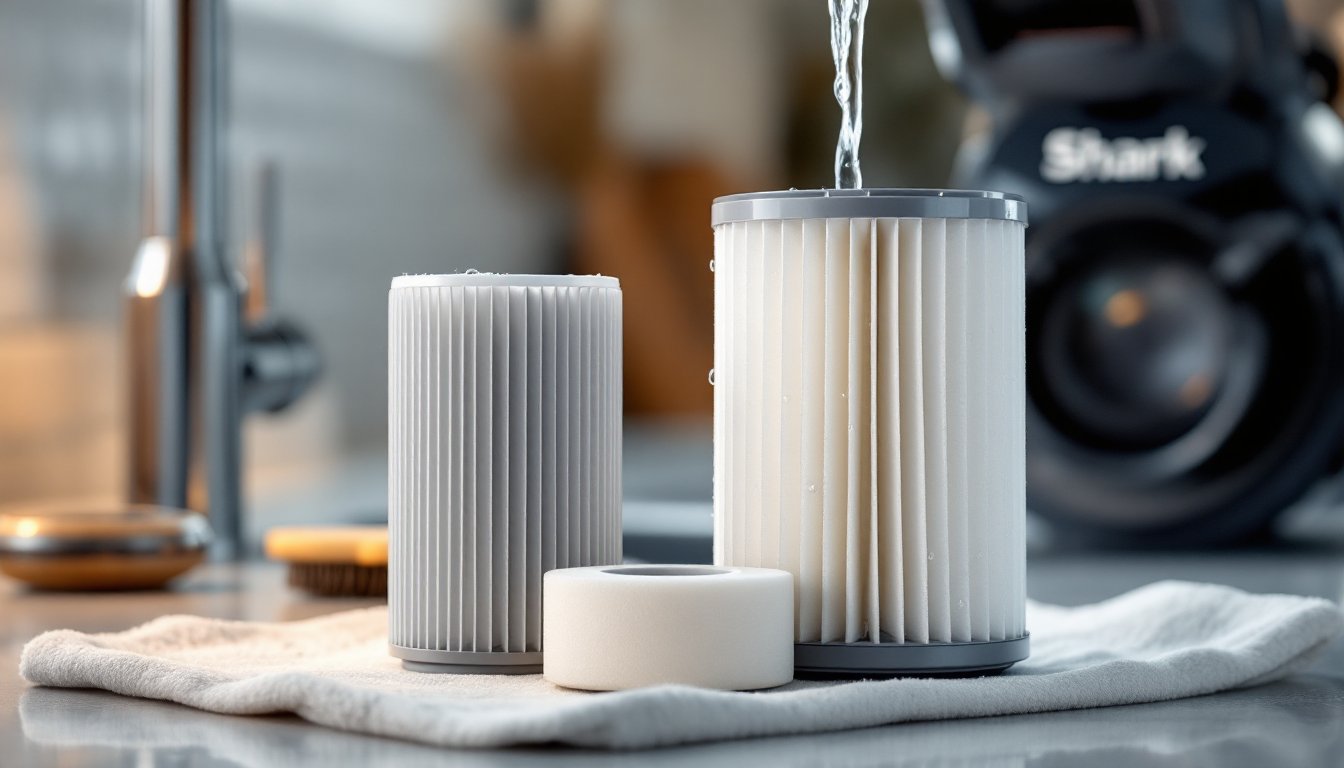
Clean your HEPA filter every 2–4 weeks if you use the vacuum 3+ times weekly. Tap it gently over a trash bin to dislodge surface dust, then rinse under cool running water. Let it air-dry completely (at least 24 hours) before reinstalling, a damp filter promotes mold and mildew, and wet filters restrict airflow severely. Never use a dryer or heat source: it warps the pleats. Foam pre-filters wash the same way: cool water, gentle agitation, and complete air drying.
The line between cleaning and replacing gets fuzzy after several years. If a HEPA filter’s pleats are permanently creased or collapsed, cleaning won’t restore full surface area. If foam becomes rigid or doesn’t bounce back after a gentle squeeze, it’s lost elasticity and won’t seal properly. At that point, cleaning buys time but replacement is coming soon. Think of it like this: cleaning is preventive maintenance: replacement is inevitable wear-and-tear. A well-maintained HEPA filter cleans better and lasts longer, but it will eventually wear out.
Step-by-Step Guide to Cleaning Your Filters
What you’ll need:
- Your Shark Rocket vacuum
- Cool running water
- A soft brush or old toothbrush (optional, for stubborn debris)
- Clean towels or rags
- A flat, clean surface (kitchen counter or sink)
- 24+ hours of drying time
Step-by-step:
-
Unplug the vacuum and empty the canister completely. No electricity running = safer work environment.
-
Locate and remove the filter assembly. On most Shark Rocket models, this means popping off the canister and pulling out the filter cage (the part the filters attach to). Refer to your model’s manual for exact location: it’s usually in the top or side of the canister.
-
Separate the foam pre-filter from the HEPA filter. They stack together, but pull them apart gently, the pre-filter usually sits outside, the HEPA inside.
-
Tap out loose dust. Hold each filter over a trash bin and tap the sides firmly. You’ll be surprised how much dust comes out without water.
-
Rinse under cool water. Never use hot water: heat degrades filter material. Rinse until water runs clear. A soft brush helps dislodge stubborn dirt, but don’t scrub aggressively, you’ll damage the pleats.
-
Squeeze gently while rinsing. A light squeeze helps water penetrate the foam, but don’t wring or twist, you’re not wringing out laundry.
-
Stand filters upright to air-dry. Place them on a clean towel in a well-ventilated area, away from direct sunlight. This takes 24–48 hours. Patience here prevents mold and mildew.
-
Reassemble once completely dry. Put the pre-filter on first, then the HEPA filter, then reinstall the filter cage into the canister.
Clean filters = better suction, longer filter life, and a healthier home. Skip this step and you’re paying for replacements way sooner than necessary.
Finding Compatible Replacement Filters
When it’s time to replace, accuracy matters. Ordering the wrong filter is a frustrating waste of $20–$50 and leaves you without a working vacuum. Here’s how to find the right part:
Check your model number first. Open the canister or flip the vacuum upside down, you’ll find a label with the model number (e.g., HZ500, HZ501, DuoClean, Vertex, etc.). Write this down or take a photo. This single number is your filter shopping key.
Where to buy: Amazon, Walmart, Target, and the official Shark website all stock Shark Rocket filters. Prices vary by retailer and whether you’re buying OEM (original equipment manufacturer) or third-party compatible filters. OEM filters cost more but guarantee exact fit and performance standards. Third-party filters are cheaper but hit-or-miss on durability. For a vacuum that’s doing the heavy lifting of maintaining your home, OEM is usually worth the few extra dollars.
Avoid common mistakes: Don’t assume “universal” filters fit your model, they often don’t seal properly, killing suction. Don’t buy a filter marked for a different Shark line (Apex, Navigator, Lift-Away) even if the shape looks similar. One millimeter off, and it won’t seal. Industry guides comparing stick vacuum performance emphasize that filter compatibility directly impacts suction and longevity, so getting the exact match matters.
Online resources: Most Shark product pages list compatible filters by model. Manuals (available as PDFs on the Shark website) include part numbers. When ordering, confirm the part number matches before checkout.