
Whether you’re managing a rental property with Spanish-speaking tenants, planning a kitchen renovation in a bilingual household, or simply want to understand appliance terminology for work or travel, knowing the Spanish word for dishwasher and related kitchen terms is practical knowledge. The Spanish word for dishwasher is lavar platos (literally, “to wash dishes”) or lavaplatos (the actual appliance). If you’re installing, repairing, or troubleshooting a dishwasher in a Spanish-language context, or ordering parts from a Spanish supplier, understanding the vocabulary and navigating Spanish-language manuals becomes essential. This guide covers the terminology, installation concepts, and practical tips every DIY-minded bilingual homeowner should know.
Table of Contents
ToggleKey Takeaways
- The Spanish word for dishwasher is lavaplatos (Latin America) or lavavajillas (Spain), with lavaplatos being the universally understood term across Spanish-speaking regions.
- Learning dishwasher terminology in Spanish is essential for DIY installation and repair projects, preventing safety hazards, leaks, and costly mistakes when following manuals or communicating with technicians.
- Understanding key Spanish terms for water supply, drainage, electrical components, and repair items—such as entrada de agua (water inlet), tubo de drenaje (drain hose), and brazos aspersores (spray arms)—enables proper part ordering and troubleshooting.
- Spanish appliance manuals follow a predictable structure starting with Seguridad (safety) and progressing through Instalación, Funcionamiento, Mantenimiento, and Solución de Problemas, making it easy to locate the information you need.
- Recognizing common control panel labels like ciclos (wash cycles), temperatura (temperature), and abrillantador (rinse aid) ensures optimal dishwasher performance and prevents accidental damage to your appliance.
- Most major appliance manufacturers offer Spanish-language customer service and online resources; having your modelo (model number) and número de serie (serial number) ready accelerates support and part replacement.
The Spanish Word for Dishwasher and Common Variations
The primary Spanish term for a dishwasher appliance is lavaplatos, pronounced “lah-bah-PLAH-tos.” Breaking it down: lava means “wash” and platos means “plates” or “dishes.” In some regions, you’ll also hear lavar los platos (the action of washing dishes) or simply máquina de lavar platos (machine for washing dishes), which is more descriptive and commonly used in formal contexts.
In Spain, the term lavavajillas is standard, lava (wash) and vajillas (tableware or dishware). Latin America tends to favor lavaplatos, though regional variations exist. Mexico, Central America, and the Caribbean predominantly use lavaplatos, while Spain and some South American countries default to lavavajillas.
When reading an appliance manual or discussing the device with a Spanish-speaking technician, lavaplatos is your safest bet for universal understanding. If someone says “la máquina de lavar platos,” they’re describing it functionally, the machine that washes dishes, which is how many people reference it in conversation.
Why Learning Kitchen Appliance Terms Matters for DIY Projects
Understanding Spanish terminology for kitchen appliances isn’t just about politeness, it’s about safety, accuracy, and avoiding costly mistakes. When you’re installing or repairing a lavaplatos, you need to identify components correctly, follow instructions precisely, and communicate with suppliers or professionals without confusion.
If you’re working with a Spanish-language installation manual (which many appliances from major manufacturers provide), every step depends on you recognizing parts, water connections, and electrical requirements. Misidentifying a fitting or supply line because you didn’t understand the label could lead to leaks, electrical hazards, or a botched installation requiring a professional to fix.
For DIY projects in multilingual households, bilingual homeowners often serve as translators or decision-makers for kitchen renovations. Knowing the correct Spanish terms for dishwashers, countertops, faucets, and cabinetry ensures that contractors, suppliers, and family members are all working from the same understanding. The Kitchn and similar kitchen design resources are invaluable when planning a bilingual kitchen project, where clarity across languages prevents scope creep and miscommunication.
How to Discuss Dishwasher Installation and Repair in Spanish
Key Spanish Terms for Installation and Maintenance
When discussing dishwasher installation or repair, certain vocabulary crops up repeatedly. Knowing these terms ensures you can work with bilingual technicians, order the right parts, or follow a Spanish manual confidently.
Water Supply & Drainage:
- Entrada de agua = water inlet: entrada fría = cold water inlet: entrada caliente = hot water inlet
- Salida de agua = water outlet or drain
- Tubo de suministro = supply hose: tubo de drenaje = drain hose
- Válvula de agua = water valve: válvula de cierre = shutoff valve
- Conexión = connection: acoplamiento = coupling
Electrical & Installation:
- Enchufe = plug: tomacorriente = outlet or receptacle
- Cable de alimentación = power cord
- Instalación empotrada = built-in installation (most modern kitchen dishwashers)
- Nicho = niche or opening (the cutout where the unit fits)
- Anclajes = anchors or fasteners
Common Repair Terms:
- Fugas = leaks: gotea = it drips or leaks
- No drena = doesn’t drain
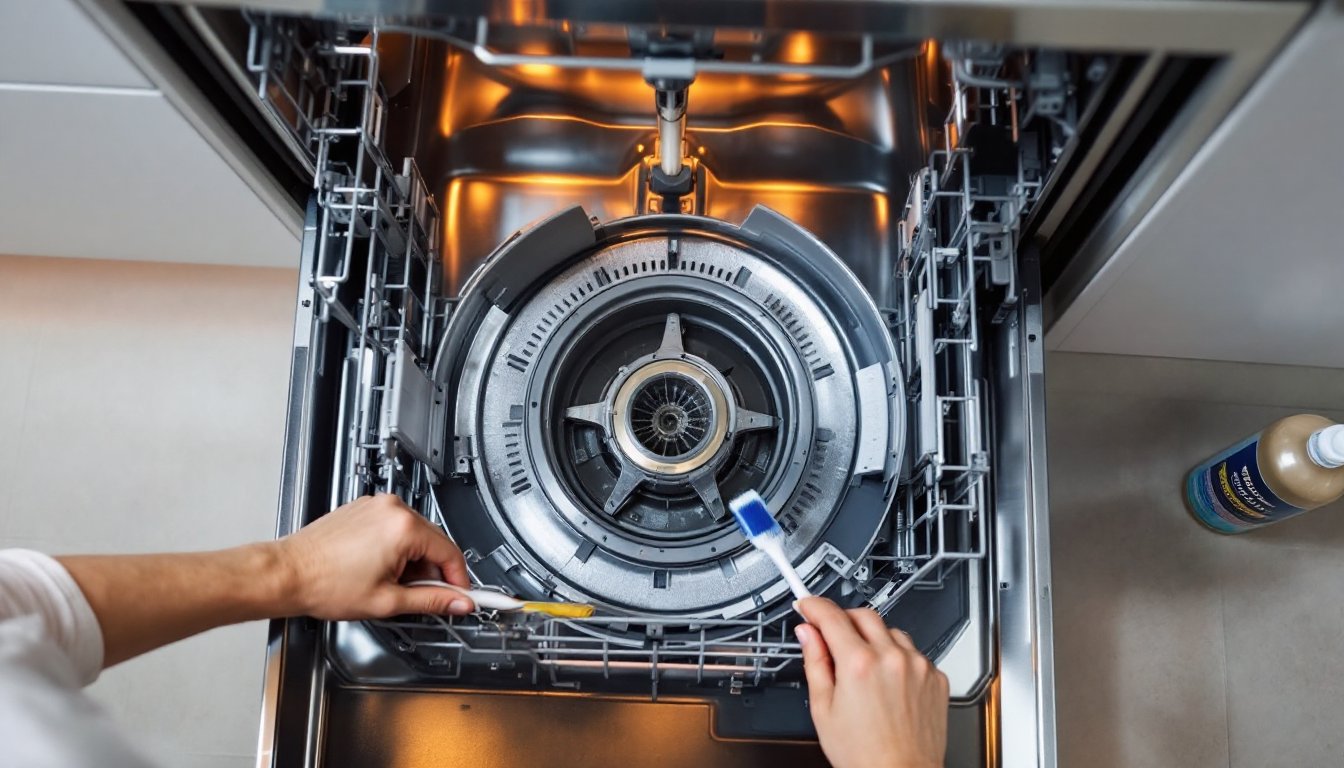
- Brazos aspersores = spray arms (the rotating parts that distribute water)
- Filtro = filter
- Bomba de drenaje = drain pump
When ordering parts, Spanish suppliers often list items by component name. For instance, “brazo aspersor inferior” is the lower spray arm: “brazo aspersor superior” is the upper spray arm. If you’re ordering from a Spanish-language parts distributor or contacting a manufacturer’s Spanish support line, having these terms written down saves time and prevents ordering the wrong component.
Essential Dishwasher Features and Parts Explained in Spanish
Understanding Spanish Labels and Settings on Your Appliance
Modern dishwashers, whether encastrable (built-in) or portátil (portable, though rare in the U.S.), feature controls and settings labeled in multiple languages. Understanding Spanish labels on your unit’s control panel or door prevents accidental damage and ensures optimal performance.
Common Control Panel Labels:
- Ciclos = wash cycles: ciclo normal = normal wash: ciclo delicado = delicate cycle: ciclo intensivo = heavy-duty cycle
- Temperatura = temperature: agua caliente = hot water: agua fría = cold water
- Duración = duration or cycle length
- Retardo = delay start (allows you to set the unit to run at a later time)
- Encendido/Apagado = on/off
- Pausa = pause
- Luces = lights (interior light)
Detergent & Rinse Aid:
- Detergente = dishwasher detergent
- Cubeta de detergente = detergent dispenser (main wash chamber)
- Cubeta de pré-lavado = pre-wash detergent dispenser
- Abrillantador = rinse aid (helps dry dishes spot-free)
- Sal para lavaplatos = dishwasher salt (for water softening in hard-water areas)
Interior Components Visible During Loading:
- Canastilla superior = upper rack
- Canastilla inferior = lower rack
- Canastilla para cubiertos = silverware basket or utensil rack
- Ruedas = wheels (rack glides)
Good Housekeeping has tested and reviewed dishwashers extensively, providing ratings and guides that often include multilingual manuals and user support resources, helpful if you’re comparing models or need clarity on a feature description across languages.
When loading or maintaining your unit, understanding these Spanish labels prevents confusion. For example, if the instruction manual states “agregue abrillantador en la cubeta etiquetada,” you now know to add rinse aid to the marked dispenser. Many newer dishwashers come with icons alongside Spanish text, making identification easier, but reading the labels themselves builds confidence.
Practical Tips for Working With Spanish-Language Manuals and Support
If you’ve purchased a dishwasher or inherited one from a Spanish-speaking previous owner, the manual might be in Spanish only. Don’t panic, here’s how to navigate it effectively.
Reading the Manual:
Spanish appliance manuals follow a predictable structure: Seguridad (safety warnings) come first, followed by Instalación (installation), Funcionamiento (operation), Mantenimiento (maintenance), and Solución de Problemas (troubleshooting). Jump directly to the section you need, and focus on diagrams and labeled illustrations, they translate themselves. Most modern manuals include exploded parts diagrams with Spanish labels, which are invaluable for identifying components.
Key instruction phrases to recognize:
- No… sin = do not… without (e.g., “No use sin abrillantador” = do not use without rinse aid)
- Asegúrese de = ensure or make sure (e.g., “Asegúrese de que las mangueras estén fijas” = ensure hoses are secure)
- Advertencia = warning: Precaución = caution
Contacting Support:
Most major appliance manufacturers (Bosch, LG, Whirlpool, GE, etc.) offer Spanish-language customer service lines. When calling, have your model number (número de modelo) and serial number (número de serie) ready. These appear on a sticker usually located inside the dishwasher door frame or on the unit’s side panel.
Online Resources & Translation Tips:
If you’re stuck on a specific term or instruction, a reverse image search of your dishwasher model combined with “manual español” often yields the official Spanish document. Google Translate’s camera feature works reasonably well for translating printed Spanish text, snap a photo of the manual page, and it will overlay an English translation (accuracy varies, but it’s helpful for clarification).
Parts & Repair Networks:
When sourcing replacement parts, Spanish-language suppliers sometimes list components differently than English-language sites. Remodelista curates kitchen product guides and resources that include links to reputable appliance retailers and support networks. Having the correct Spanish term for a part (e.g., “brazo aspersor” instead of trying to describe it) speeds up ordering and ensures you get the right component.