A built-up roof might not be glamorous, but it’s a workaholic up there. If you own a flat-roofed home or commercial property, you’ve likely heard the term “built-up roof”, a multi-layer system of tar, gravel, and asphalt that’s been protecting buildings for decades. These roofs are tough, but they’re not invincible. As seasons change and weather takes its toll, patches of damage creep in: a blister here, a crack there, maybe a stain on your ceiling. The good news? Many built-up roof repairs are DIY-able if you catch them early and know what you’re doing. This guide walks you through identifying damage, tackling smaller fixes yourself, and recognizing when you need a licensed roofer. Let’s get your roof back to work.
Table of Contents
ToggleKey Takeaways
- Built-up roofs typically last 20–30 years but require regular inspection and prompt built-up roof repair to prevent water damage and extend their lifespan.
- Small, localized damage like cracks and blisters under one square foot can often be repaired DIY-style using roofing cement or self-adhesive patch tape, though patches are temporary fixes lasting 3–5 years.
- Standing water, widespread alligatoring patterns, or damage near seams and flashing are clear signs you need a professional roofer, as these indicate systemic deterioration beyond DIY repair.
- Interior water stains, soft drywall, or musty smells are warning signs that water has infiltrated your built-up roof, and you should inspect your attic and check for wet insulation immediately.
- Professional flat roof repairs typically cost $1,500–$3,000 for targeted fixes, while full replacement ranges from $5,000–$15,000+, so get multiple licensed quotes before committing to work.
- Annual roof inspections using binoculars from the ground or safe in-person walks help catch early damage before it becomes expensive, and always ensure your roofer handles required permits and carries proper insurance.
What Is a Built-Up Roof and Why It Needs Repair
A built-up roof (often called a tar-and-gravel or tar-and-stone roof) is a low-slope roofing system made of multiple layers of bitumen (hot tar or asphalt) alternating with felt or fiberglass reinforcement. A gravel or stone aggregate layer sits on top for UV protection and ballast. The whole assembly typically sits on a plywood deck and sometimes an underlayment.
Built-up roofs are popular on flat or low-slope roofs because they’re relatively durable, 20 to 30 years is typical for residential systems, sometimes longer with maintenance. They’re also cheaper upfront than single-ply membranes in many cases.
They need repair for the same reasons any roof does: age, weather exposure, poor drainage, and foot traffic. Water gets under the surface layers, bitumen dries out and cracks, and the gravel can shift or scatter. Unlike pitched roofs that shed water quickly, flat roofs hold standing water if gutters or drains clog. That standing water is the enemy. It creeps into seams, penetrations, and cracks. Over time, the system breaks down layer by layer.
Signs Your Built-Up Roof Needs Repair
Catching damage early saves money and headaches. Walk your roof once a year (safely, in dry conditions, with a spotter) or inspect it from the ground with binoculars. Here’s what to watch for.
Visible Cracks, Blisters, and Alligatoring
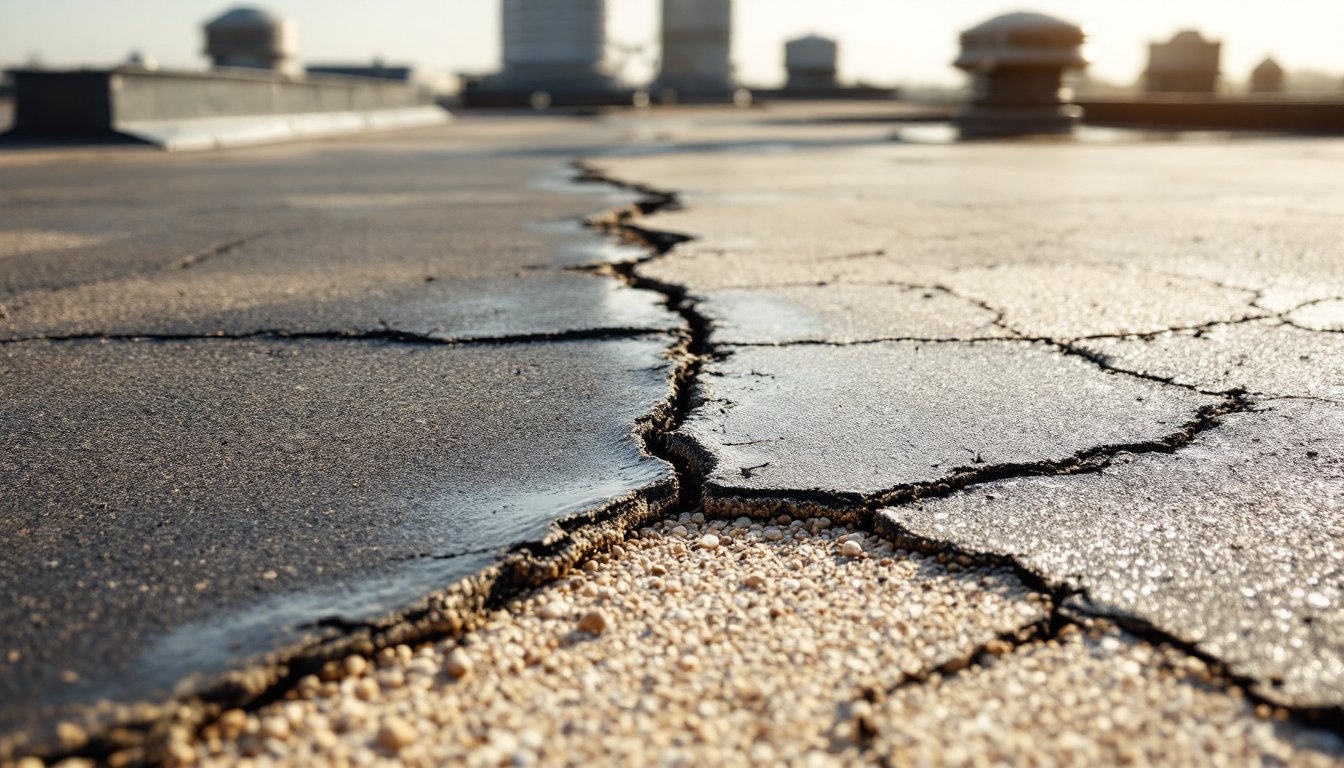
Cracks are the most obvious warning. Look for small fractures in the bitumen surface, especially around penetrations like vents, flashing, or skylights. Cracks let water in, that’s their job, and they’re good at it.
Blisters look like bubbles in the surface. They form when moisture trapped between layers heats up and expands. A small blister might just be cosmetic, but it indicates water’s already in there. Once the blister pops, it’s an open wound.
Alligatoring is the creepy-looking pattern of interconnected cracks across the roof surface, resembling alligator skin. This happens when bitumen hardens and shrinks over years of sun exposure. It signals the roof’s nearing the end of its life and typically needs replacement rather than patching.
Water Leaks and Interior Damage
The most telling sign? Water stains on your ceiling or interior walls, especially after rain. Soft or discolored drywall, mold spots, or a musty smell all point to moisture intrusion. By the time you see interior damage, the problem’s been there a while.
Check your attic or the space directly under the roof. Look for wet insulation, staining on joists or beams, and any sign of active dripping. This tells you roughly where the leak is happening. Built-up roof leaks aren’t always obvious from above, water travels sideways under layers before finding a weak spot and dripping through.
DIY Built-Up Roof Repair Techniques
If you’re handy and the damage is small and localized, you can patch it. The key word: small. A few cracks or a blister covering less than a square foot? That’s a DIY job. Half your roof is shot? Call a roofer.
Materials and tools you’ll need:
- Roofing patch kit or roof repair tape (self-adhesive tar tape, 2–4 inches wide)
- Roofing cement or asphalt roof sealant
- Utility knife or roofing knife
- Wire brush or stiff broom
- Caulk gun (if using sealant)
- Safety glasses, work gloves, and sturdy shoes with grip
- Flashlight (easier to spot damage)
Steps for patching a crack or blister:
-
Clear the area. Brush away loose gravel and debris with a stiff broom or wire brush. You need bare, dry surface to work with.
-
Open the blister (if present). Carefully cut an “X” or a slit across the blister with a utility knife, making a small opening. Don’t go too deep, you’re not trying to remove layers, just puncture the bubble. Let air and any moisture escape.
-
Clean and dry. Use a dry cloth to wipe out moisture. If the area’s wet, let it dry completely, this might take hours on a hot day. Wet patches won’t seal properly.
-
Apply roofing cement or patch tape. For cracks, use roofing-grade sealant applied with a caulk gun along the entire length. For blisters, you can either inject cement under the bubble or spread it generously over the cut area. Some DIYers prefer self-adhesive roof patch tape, it’s cleaner than liquid sealant.
-
Press down firmly. If using tape, roll a hand roller or wooden block over the area to ensure good contact and squeeze out air pockets.
-
Smooth and finish. Spread sealant slightly beyond the patched area to feather the edges and prevent water from finding a lip to slide under. Top with new gravel or aggregate if the original surface is bare.
Important safety notes: Roofs are slippery, especially on hot days when tar softens. Wear slip-resistant shoes. Never work alone, have someone on the ground or in the house ready to call for help. Stay away from roof edges unless you’re using fall protection. On sunny days, the roof surface can reach 150°F+: wear gloves and avoid prolonged skin contact.
Patches are temporary fixes. They buy time and prevent small leaks from spreading, but they’re not a roof replacement. Expect patches to last 3–5 years if conditions are favorable, sometimes less in extreme climates.
When to Call a Professional Roofer
Know your limits. A professional roofer brings insurance, tools, and knowledge of local building codes. If your roof shows any of these signs, get a quote:
- Multiple cracks or blisters across a large area. This isn’t cosmetic damage, it’s systemic deterioration.
- Alligatoring pattern or widespread brittleness. The bitumen’s failing. Patching individual spots won’t save the roof.
- Standing water (ponding). This points to drainage issues or deck sagging. Fixing it often means regrading the roof or replacing deck sections, both structural work.
- Leaks that persist after your patch attempt. The water’s probably coming from somewhere else or the damage is deeper than you thought.
- Roof age over 20–25 years. Even if it looks okay, get an inspection. End-of-life roofs fail suddenly.
- Damage near seams, flashing, or penetrations. These details are critical to preventing leaks and often need specialized tools and materials.
Costs for professional repair or replacement vary widely. According to flat roof replacement pricing, you might pay $1,500–$3,000 for targeted repairs or $5,000–$15,000+ for a full replacement, depending on roof size and material grade. Get three quotes and ask what’s included. Always verify that the contractor is licensed and insured in your state. Check reviews on Angi or similar platforms, and ask for references.
Permits are often required for roof work. Your roofer should handle this, but confirm it upfront. Unpermitted work can cause insurance claim problems down the line.
Conclusion
Built-up roofs are reliable workhorses, but they demand attention. Catch small damage early, patch what you can safely, and don’t hesitate to call a pro when the work’s beyond your comfort zone. Regular inspection and quick fixes keep your roof dry and add years to its life. Your ceiling, and your wallet, will thank you.