Samsung dishwashers have become a go-to choice for homeowners looking to upgrade their kitchen with reliable, feature-rich appliances. Whether you’re renovating your kitchen or replacing an aging model, understanding what makes Samsung dishwashers different, and which model fits your home, takes the guesswork out of the investment. This guide walks you through the key features, popular 2026 models, and practical installation and maintenance tips so you can make a confident choice that actually matches your household’s needs and budget.
Table of Contents
ToggleKey Takeaways
- Samsung dishwashers stand out for combining quiet operation (39–44 decibels), ENERGY STAR efficiency, and durable stainless steel interiors with WaterWall spray technology for superior cleaning performance.
- Smart connectivity via the SmartThings app is a convenient feature for remote monitoring and cycle control, but Samsung dishwasher core washing performance remains strong with or without WiFi capability.
- Proper installation—including correct water line diameter, sloped drain hose placement, and leveling—is critical to prevent leaks and water damage, making professional plumber installation a worthwhile $150–$300 investment.
- Monthly spray arm cleaning and a vinegar cycle every 2–3 months keep your Samsung dishwasher running efficiently and odor-free, while regular rinse aid use prevents spotting on dishes, especially in hard water areas.
- Popular 2026 models like the DW80R6061US (mid-range with smart features) and DW60A6002BB (budget-friendly) offer reliable cleaning and durability across different price points and household needs.
Why Samsung Dishwashers Stand Out
Samsung has built a reputation in the appliance market for blending durability, smart technology, and thoughtful design, and their dishwashers are no exception. Unlike some competitors that focus solely on raw cleaning power, Samsung integrates features that make everyday kitchen life more convenient, from remote monitoring through your phone to adjustable racks that actually accommodate your real dishes (not just a perfect set of plates).
One reason Samsung dishwashers command attention is their approach to noise reduction. Most models operate at 44 decibels or quieter, which is roughly the sound level of a normal conversation, quiet enough that running the dishwasher during dinner won’t derail conversation or interrupt streaming. This matters in open-concept kitchens where noise travels.
Another defining trait is their commitment to water and energy efficiency without sacrificing cleaning performance. Many Samsung models earn ENERGY STAR certification, meaning they use less water and electricity than standard models while still tackling baked-on food residue. That translates to lower utility bills over the dishwasher’s typical 10- to 12-year lifespan.
Samsung also designs their tub and spray arms with longevity in mind. The stainless steel interior resists rust and staining, and their WaterWall technology uses a single rotating arm to send water across the entire loading surface, which reduces water pooling and improves coverage compared to traditional multi-arm systems. It’s not flashy marketing, it’s a mechanical choice that directly affects cleaning results.
Key Features to Consider Before You Buy
Smart Technology and App Controls
If your kitchen is heading smart, Samsung dishwashers integrate well into that ecosystem. Many 2026 models connect via WiFi and the SmartThings app, letting you start or monitor cycles from your phone, receive alerts when the wash finishes, and sometimes even diagnose basic issues without calling a service rep. This is genuinely useful if you’re running late and want to delay the cycle until off-peak hours, or if you forget whether you actually started the load.
That said, smart features aren’t essential, they’re a convenience layer. If you prefer a dial and buttons, Samsung still makes solid non-connected models at lower price points. The core washing performance remains the same whether or not you have app control.
Capacity, Wash Cycles, and Noise Levels
Most Samsung dishwashers hold 16 to 18 place settings, which is roughly equivalent to dishes and cookware for a family dinner for 4 to 6 people. If you entertain frequently or have a large household, this standard capacity usually works. A few premium models offer slightly larger load capacities, but you’ll sacrifice some counter or cabinet space to fit them.
Wash cycles typically include standard, pots and pans, delicate, and quick-wash options. Many models also feature a third rack for utensils or smaller items, which cuts down on pre-rinsing and gives you more flexibility in loading. Check whether the model you’re eyeing has manual or auto-dispensing detergent (auto is more convenient, but requires specific pod-based detergents).
Noise levels matter more than you’d think in a kitchen where you’re spending time. Samsung’s quieter models sit around 39 to 44 decibels. If you have an open kitchen or you’re sensitive to appliance hum, prioritize models on the quieter end. Reviews from sources like Good Housekeeping’s testing lab often compare noise across brands, which can help you narrow the field.
Popular Samsung Dishwasher Models for 2026
Samsung’s 2026 lineup spans several tiers, so there’s a model to fit most budgets. The DW80R6061US is a mid-range workhorse with WiFi connectivity, a third rack, and WaterWall spray technology. It’s energy-efficient, quieter than many competitors, and offers enough features without overwhelming controls. This model fits well in kitchens where you want reliability and smart capability without premium pricing.
The DW80K7050US sits at a higher price point and adds convection dry (which uses heated air instead of just ambient drying) and a specialized bottle-wash cycle. If you load a lot of glassware or travel mugs, this extra drying cycle reduces water spotting and speeds up drying times, which matters if counter space is tight.
For budget-conscious shoppers, Samsung’s DW60A6002BB series offers solid core performance, good wash cycles, respectable noise levels, and durability, without smart connectivity or premium finishes. You’re paying for cleaning performance, not app integration.
Before settling on a model, check current reviews on appliance testing sites and compare real-world feedback. Models change annually, and what’s popular this year might be discontinued next year. Also verify that your chosen model is available at major retailers in your region: some models are exclusive to certain stores or online marketplaces.
Installation and Setup Tips for Your Home
Installing a dishwasher is one of the more approachable appliance swaps if your space already has plumbing and electrical rough-in, but skipping prep work is where most people run into trouble. Before you order, measure the cabinet opening (width, depth, height). Samsung dishwashers are typically 24 inches wide and 35 inches tall, but exact dimensions vary by model, and a quarter-inch discrepancy can mean a poor fit.
Check your water supply line and drain setup. You’ll need a 3/8-inch diameter water supply line connected to the hot water side of your sink. If your current setup uses a narrower line or cold water, you’ll need to reroute or install an adapter. The drain hose must slope slightly downward to prevent standing water and odors, don’t coil it up tight or let it rest at the same level as the tub.
If this is your first dishwasher install or you’re uncomfortable working with plumbing, hire a licensed plumber. A bad water connection can lead to leaks that damage cabinetry, and improper drainage causes mold and mildew. Most plumbers charge $150 to $300 for a dishwasher hookup, which is cheap insurance against water damage.
Once the dishwasher is in place, level it side-to-side and front-to-back using the adjustable legs. A dishwasher that tilts forward will leak. Run the first cycle with hot water to clear debris from the lines, and install your preferred rinse aid, this reduces spotting and improves dry performance, especially if you have hard water.
For smart models, connect to WiFi during setup per the manual. Test that the app recognizes the dishwasher before you rely on remote controls. A poor WiFi signal in the kitchen can cause connection drops, so position your router accordingly or consider a WiFi extender if your kitchen is far from the main unit.
Maintenance and Care Recommendations
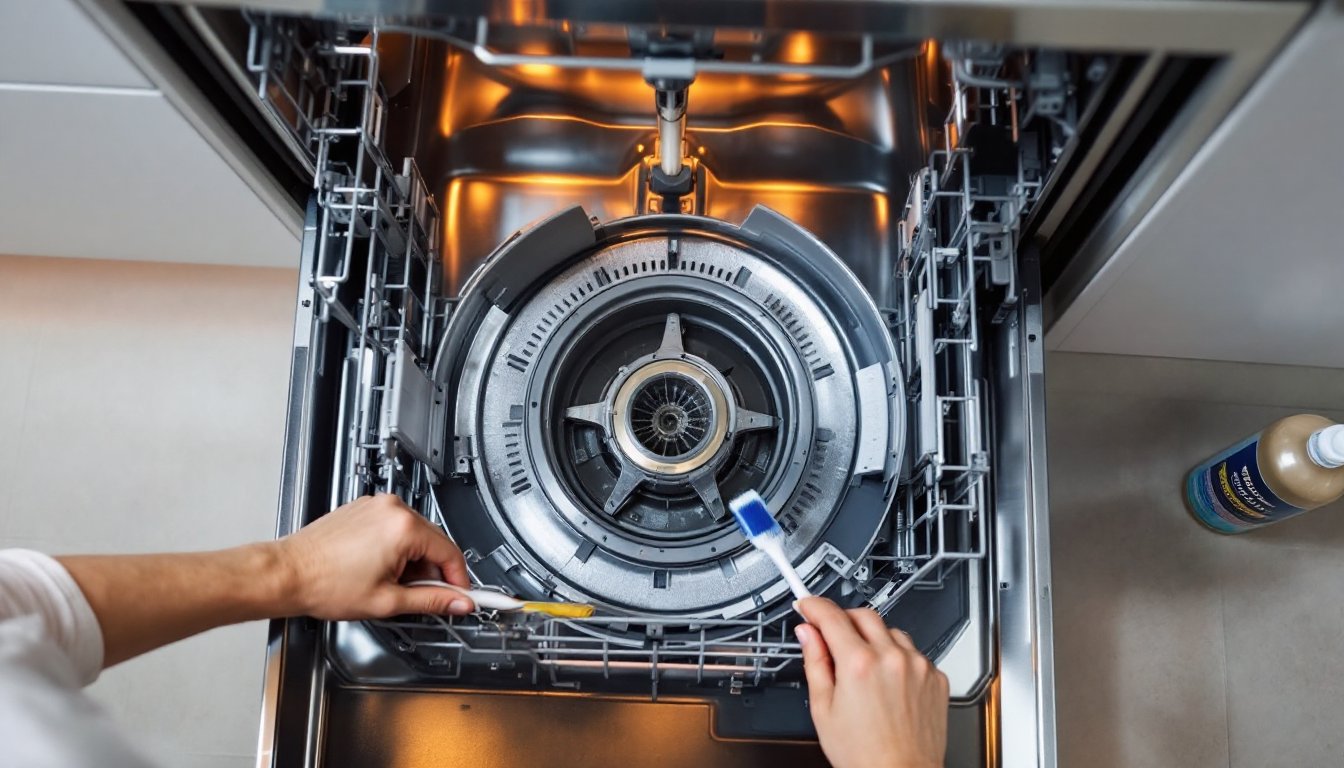
A Samsung dishwasher should run trouble-free for years with minimal upkeep, but a few simple habits prevent common issues. Clean the spray arms monthly by gently removing the lower and upper racks and rinsing the arms under the sink. Over time, mineral deposits and food particles clog the holes, which reduces spray pressure and cleaning power. A toothpick can help clear stubborn debris without scratching the arm.
Run the empty dishwasher with white vinegar (one cup in a dishwasher-safe container on the top rack) every two to three months. This cycle dissolves mineral buildup, freshens the interior, and prevents odors. Avoid commercial dishwasher cleaners on a regular basis: they’re harsh and unnecessary if you’re using vinegar.
Check the rubber door gasket every few months. If it’s cracked, warped, or slimy with mold, replace it. A faulty gasket leads to leaks and poor cleaning performance. Gaskets are usually $30 to $60 and take about 10 minutes to swap.
Use rinse aid consistently if your water is hard or moderately hard. It improves drying and prevents the white spotty haze that builds up on dishes over time. Most rinse aid dispensers need refilling every 3 to 6 months depending on cycle frequency.
If your dishwasher develops a smell, it’s usually a drain clog or buildup. Run the vinegar cycle first. If odor persists, check the drain filter (typically located under the bottom spray arm) for trapped food or debris. Clean it under running water, and replace it if it’s cracked. Call a service tech if water backs up or the smell is chemical, that indicates a deeper drain line problem beyond DIY repair. Don’t ignore leaks: they cause hidden water damage in cabinetry and flooring, so address them immediately with a plumber or technician.